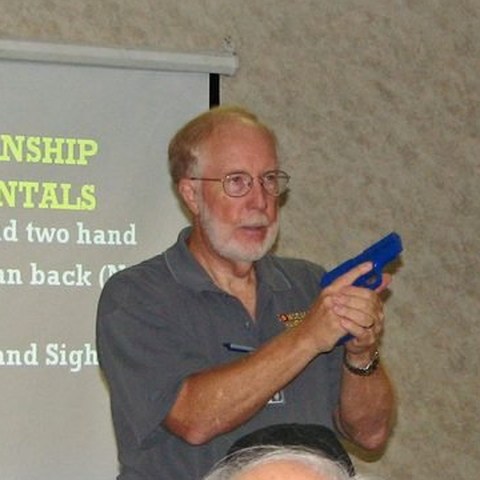
 Chris Raper — Retired North Carolina law enforcement (40+ years) · U.S. Air Force Security Police · NRA-certified Pistol, Rifle & Shotgun Instructor · NC DOJ-certified Concealed Carry Instructor · Founder, Concealed Handgun Carry, Inc. (Elm City, NC, 2006)
This guide draws on my own research and what my students bring into the Concealed Handgun Carry class every week. The method line at the end of the article says exactly how this guide was built.
Quick answer
Whether you can carry a concealed gun at work usually depends on your employer, not just your permit. Private employers can generally ban guns on their property, and in most states you can be fired for breaking that policy even if carrying is otherwise legal. About two dozen states have “parking lot” laws that let employees keep a lawfully owned gun locked in their own vehicle at work. Federal buildings, post offices, schools and other prohibited places stay off-limits no matter what your employer allows.
After “where do I keep it at night,” the most common question in my North Carolina concealed handgun class is “can I carry at work?” People get a permit so they can be armed during the part of the day they spend away from home, and then they discover that the place they spend most of that day may not allow it. The answer comes from three layers that stack on top of each other: federal law, your state’s law, and your employer’s policy. You have to clear all three.
I am a certified instructor, not a lawyer, and nothing here is legal advice. Employment law and carry law both vary by state and change often, so read your employer’s written policy and your state’s current statutes before you decide.
Layer one: federal places where you cannot carry
If your job is in one of these places, a permit and a friendly employer do not change the answer.
- Federal facilities. Under 18 U.S.C. 930, firearms are generally prohibited in federal buildings where federal employees regularly work, with limited exceptions such as law enforcement and lawful hunting.
- Post offices. Postal regulations at 39 C.F.R. 232.1 prohibit carrying or storing firearms on postal property, which includes postal parking lots. In September 2025 a federal court in Texas (Firearms Policy Coalition v. Bondi) blocked enforcement at ordinary post offices for members of two gun-rights organizations; for everyone else the rule still applies. Check its current status before you rely on it.
- Schools. Federal and state law restrict guns on school property; if you work in or deliver to a school, read your state’s statute closely.
- Airports and military bases. Secure areas of airports and military installations have their own rules that override a carry permit.
Layer two: your state’s prohibited places
Every carry state lists places where a permit does not apply: commonly courthouses, schools, government offices, police stations and jails, and in some states bars, polling places or health-care facilities. If your workplace is one of these, your state law decides before your employer does. In North Carolina those places are listed in G.S. 14-415.11(c); our where you cannot carry concealed in North Carolina guide walks through them one statute at a time, including the locked-vehicle exceptions.
Layer three: your employer’s policy
PRIVATE EMPLOYERS:
In general, a private employer may prohibit weapons on its property, and many do through a “weapons-free workplace” policy in the employee handbook. Most American employment is at will, so violating that policy can cost you your job even when the carry itself is legal. A permit protects you from criminal charges in the places it covers; it does not protect your employment.
READ WHAT THE POLICY ACTUALLY COVERS:
Policies differ on scope. Read for: the building, the parking lot, your personal vehicle, company vehicles, job sites and customer locations, and work travel. Many policies cover company vehicles and the building but say nothing clear about a locked personal vehicle in the lot. If the policy is unclear, ask in writing.
POSTED SIGNS:
Separate from the handbook, a business can post its premises. In North Carolina, under G.S. 14-415.11(c)(8), a permit does not authorize carry on private premises where the person in control has posted a conspicuous notice prohibiting concealed handguns, and carrying past that notice is an infraction under G.S. 14-415.21(a). That rule applies to employees and customers alike, and to the client sites you visit for work.
PUBLIC EMPLOYERS:
Government employees face both the state’s prohibited-places rules for government buildings and their agency’s personnel policies. Check both.
Parking-lot laws: keeping a gun locked in your car at work
Many states have passed “parking lot” or “guns-at-work” laws that limit an employer’s ability to ban lawfully owned guns stored in an employee’s own locked vehicle. A 2020 review by the Duke Center for Firearms Law counted 24 states with some form of parking-lot law. Common features:
- The vehicle must be locked, or the gun must be in a locked compartment, and some states require it to be out of sight.
- Employer-owned or leased vehicles are usually excluded.
- Many states exempt certain workplaces, such as schools, prisons and detention facilities, nuclear plants and employers that handle explosives or work in national defense.
- Some states also bar employers from searching employee vehicles or asking about guns stored in them.
- Most still let the employer ban guns inside the building.
Even where a parking-lot law protects you, the gun has to be secured. A gun left loose under the seat of a car in a public lot is a theft waiting to happen. Use a lockbox cabled or bolted to the vehicle; our best car gun safe and best portable gun safe guides cover the options.
Company vehicles, client sites and jobs on the road
COMPANY VEHICLES:
Most weapons policies treat a company truck or car as company property, and most parking-lot laws exclude employer-owned vehicles. Unless your employer says otherwise in writing, assume a company vehicle is off-limits for a gun, even a locked one.
CLIENT SITES AND OTHER PEOPLE’S HOMES:
Contractors, delivery drivers, home-health workers and sales reps spend the day on property they do not control. Your employer’s policy usually follows you there, and the property owner can post or simply ask you not to bring a gun in. In North Carolina a conspicuous posted notice has the force of law under G.S. 14-415.11(c)(8). Plan the day: if the next stop is a school, a courthouse, a post office or a posted business, decide before you leave where the gun will be and how it will be secured.
WORK TRAVEL:
Crossing a state line on a work trip puts you under that state’s carry and reciprocity rules. Check reciprocity and duty-to-inform rules before you go; our North Carolina reciprocity guide is a starting point.
Carrying at work in North Carolina
North Carolina’s permit statute, G.S. 14-415.11, does not contain a general rule requiring private employers to allow guns in employee parking lots. In practice that means your employer’s written policy and any posted notice control the building and, if the policy says so, the lot. Where state law prohibits carry, such as schools and courthouses, there are specific locked-vehicle exceptions for permit holders, which we cover in the where you cannot carry guide. If you transport a gun in your vehicle without carrying it on your body, read our concealed carry in your car in North Carolina page, and our NC concealed carry FAQ for the rest.
How to ask HR about carrying at work
If the policy is unclear, or you want it changed, ask in writing and keep it short and professional:
- Ask what the policy covers: building, parking lot, personal vehicles, company vehicles and client sites.
- If guns are banned in the building, ask whether a lawfully owned firearm may be kept locked in your personal vehicle.
- If you want a change, suggest something specific, such as allowing permit holders to store a gun in a locked container in their own car.
- Keep the reply. A written answer protects you better than a hallway conversation.
If you own the business, you set the policy. Talk with your insurer and an employment lawyer before you write it, and put it in writing either way.
If your employer allows carry
- Carry deep and stay quiet about it. Coworkers do not need to know. Our how to stop printing guide helps if your work clothes are close-fitting.
- Use a holster that covers the trigger and stays on the belt. Work days involve bending, lifting and sitting. See our concealed carry holster guide.
- Do not take the gun off at work. The restroom is where carriers most often leave a gun behind. Learn to keep it holstered.
- Know where you will go next. A lunch run to the post office or a client’s posted building can put you on the wrong side of the law.
Key takeaway: concealed carry at work is allowed only where federal law, your state’s law and your employer’s policy all permit it; where they do not, a locked container in your own vehicle may be your legal option.
Concealed carry at work FAQ
Can my employer stop me from carrying a concealed gun at work?
Generally, yes. Private employers can ban weapons on their premises, and in most states violating that policy can lead to discipline or firing even if carrying is otherwise legal.
Can my employer ban guns in my car in the company parking lot?
It depends on your state. About two dozen states have parking-lot laws that protect lawfully owned guns locked in an employee’s own vehicle, usually with exceptions for certain workplaces and company vehicles.
Is carrying past a no-guns sign at work illegal in North Carolina?
Carrying a concealed handgun on private premises with a conspicuous posted notice prohibiting it is an infraction under G.S. 14-415.21(a), in addition to any employment consequences.
Can I carry at a post office or federal building where I work?
Generally no. Federal law prohibits firearms in most federal facilities and on postal property, with limited exceptions. A 2025 court injunction affects only members of specific organizations at ordinary post offices.
Can I be fired for carrying at work if it is legal in my state?
In most states, yes, if it violates your employer’s written policy, because most employment is at will. Some states limit this for guns stored in personal vehicles.
Chris Raper
Chris Raper is the founder and lead reviewer of Conceal & Carry Network. A retired North Carolina law-enforcement officer with more than 40 years of service and a U.S. Air Force Security Police veteran, he founded Concealed Handgun Carry, Inc. in Elm City, NC in 2006 and has taught the state-approved NC Concealed Handgun Carry class there ever since. He is an NC Department of Justice certified Firearms Safety Instructor, an NRA Pistol, Rifle and Shotgun Instructor, an NRA Range Safety Officer and a graduate of Massad Ayoob's Lethal Force Institute. He reviews the carry guns, holsters, safes and sight tools his students ask about every week.