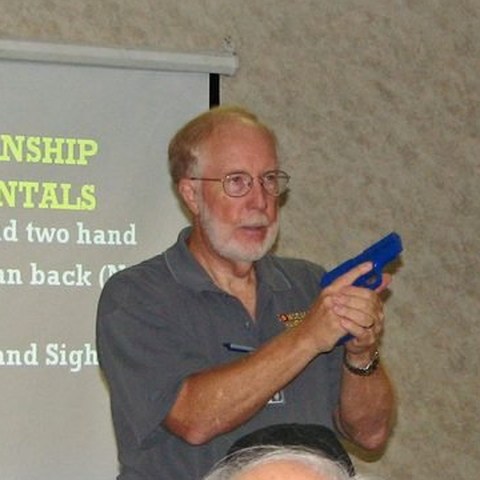
 Chris Raper — Retired North Carolina law enforcement (40+ years) · U.S. Air Force Security Police · NRA-certified Pistol, Rifle & Shotgun Instructor · NC DOJ-certified Concealed Carry Instructor · Founder, Concealed Handgun Carry, Inc. (Elm City, NC, 2006)
This guide draws on my own research and what my students bring into the Concealed Handgun Carry class every week. The method line at the end of the article says exactly how this guide was built.
The holster is the piece of concealed carry gear that decides whether you actually carry every day, whether you can get the gun out when it matters, and whether you ever have a negligent discharge. We have watched thousands of students draw from every kind of holster on our range in Elm City, NC. This page organizes everything we have learned into one series of guides.
Start with the pillar article, then go to the topic you are wrestling with. All of it is informational — we do not sell holsters and these pages recommend no brands.
Start here
- How to choose a concealed carry holster — the four non-negotiables, positions, materials, retention, fit and a decision checklist.
- Holster safety rules — trigger-guard coverage, reholstering, clothing hazards and the patterns behind negligent discharges.
Where on the body
- IWB vs. OWB holsters — concealment, comfort, speed and the open-carry question.
- Appendix carry (AIWB) guide — safety, body types, claws and wedges, who should start elsewhere.
- Carry positions: the clock guide — 1 to 6 o’clock, strong side, small of back, seated and driving.
- Pocket, ankle, shoulder and belly band holsters — when the alternatives make sense and when they do not.
- Concealed carry holsters for women — body-shape realities, clothing strategies and the truth about purse carry.
Materials, retention and fit
- Kydex vs. leather vs. hybrid holsters.
- Holster retention levels explained.
- Holster fit and sizing guide — exact-model fit, lights, optics and how to test at home.
- Gun belt guide — why the belt matters more than the holster.
- Leather holster break-in and care.
Concealing and training
- How to stop printing — causes, fixes and the North Carolina legal reality.
- Drawing from concealment: practice drills — safe dry-fire setup, the four-step draw and a progression that builds real speed.
Carry legally, too
Gear is only half of it. Our North Carolina concealed carry laws guide covers the permit, prohibited places, vehicles and the duty to inform, and the glossary defines the terms used throughout these pages.
Bottom line
Buy a rigid holster molded for your exact gun, wear it on a real gun belt, practice the draw dry until it is boring, and reholster slowly every single time. Then come put it to work on the range in our Defensive Shooting Class, where every student draws from concealment under supervision.
Frequently asked questions
What is the most important feature of a concealed carry holster?
Full, rigid coverage of the trigger guard. A holster that lets anything reach the trigger — a finger, a shirt tail, a drawstring — is unsafe no matter how comfortable or inexpensive it is.
Is IWB or OWB better for concealed carry?
Inside-the-waistband conceals better under normal clothing and is what most of our students end up carrying. Outside-the-waistband is more comfortable and faster but needs a cover garment, and in North Carolina an exposed OWB holster is open carry.
Is appendix carry safe?
Yes, when the holster covers the trigger guard completely, the carrier reholsters slowly while looking the gun in, and the muzzle is managed consciously when seated. It is not the position we start brand-new shooters in.
Do I really need a gun belt?
Yes. A soft dress belt lets the holster sag, tilt and print, and it makes a clean draw almost impossible. A stiff 1.5-inch belt fixes more holster complaints than a new holster does.
Should I buy a holster before I buy the gun?
No. Buy the gun, learn its exact model and generation, decide on light or optic, and then buy a holster molded for that exact configuration.
Chris Raper
Chris Raper is the founder and lead reviewer of Conceal & Carry Network. A retired North Carolina law-enforcement officer with more than 40 years of service and a U.S. Air Force Security Police veteran, he founded Concealed Handgun Carry, Inc. in Elm City, NC in 2006 and has taught the state-approved NC Concealed Handgun Carry class there ever since. He is an NC Department of Justice certified Firearms Safety Instructor, an NRA Pistol, Rifle and Shotgun Instructor, an NRA Range Safety Officer and a graduate of Massad Ayoob's Lethal Force Institute. He reviews the carry guns, holsters, safes and sight tools his students ask about every week.