 Chris Raper — Retired North Carolina law enforcement (40+ years) · U.S. Air Force Security Police · NRA-certified Pistol, Rifle & Shotgun Instructor · NC DOJ-certified Concealed Carry Instructor · Founder, Concealed Handgun Carry, Inc. (Elm City, NC, 2006)
This guide draws on my own research and what my students bring into the Concealed Handgun Carry class every week. The method line at the end of the article says exactly how this guide was built.
Gun collections have a way of growing. One carry pistol turns into a deer rifle, a turkey gun and a .22 for teaching the grandkids, and pretty soon the closet corner is full. When students tell me they’ve reached that point, the talk moves from a nightstand box to a real safe.
The Wasatch 18EGW is the kind of safe that comes up in that talk: a 55-inch, pebble-gray cabinet with a backlit keypad, a backup key, a lever handle and a fire claim, at a price well under the big-name safes. My take: it’s a lot of safe on paper for the money, but the fire claim rests on the seller’s word and the weight and steel thickness aren’t listed at all. Anchor it, and verify the gaps before you pay.
FYI, prices and ratings are accurate as of time of writing.
Specs from the manufacturer listing · owner feedback summarized and labelled · hands-on test notes being added · How we review
Wasatch 18EGW 18-Gun Safe – Best Mid-Priced Keypad Gun Safe Under $1,000
HIGHLIGHT:
A 9.9 cubic foot interior with good depth, a backlit keypad and backup key, and five bolts listed on the door.
FRONT PANEL & KEYPAD:
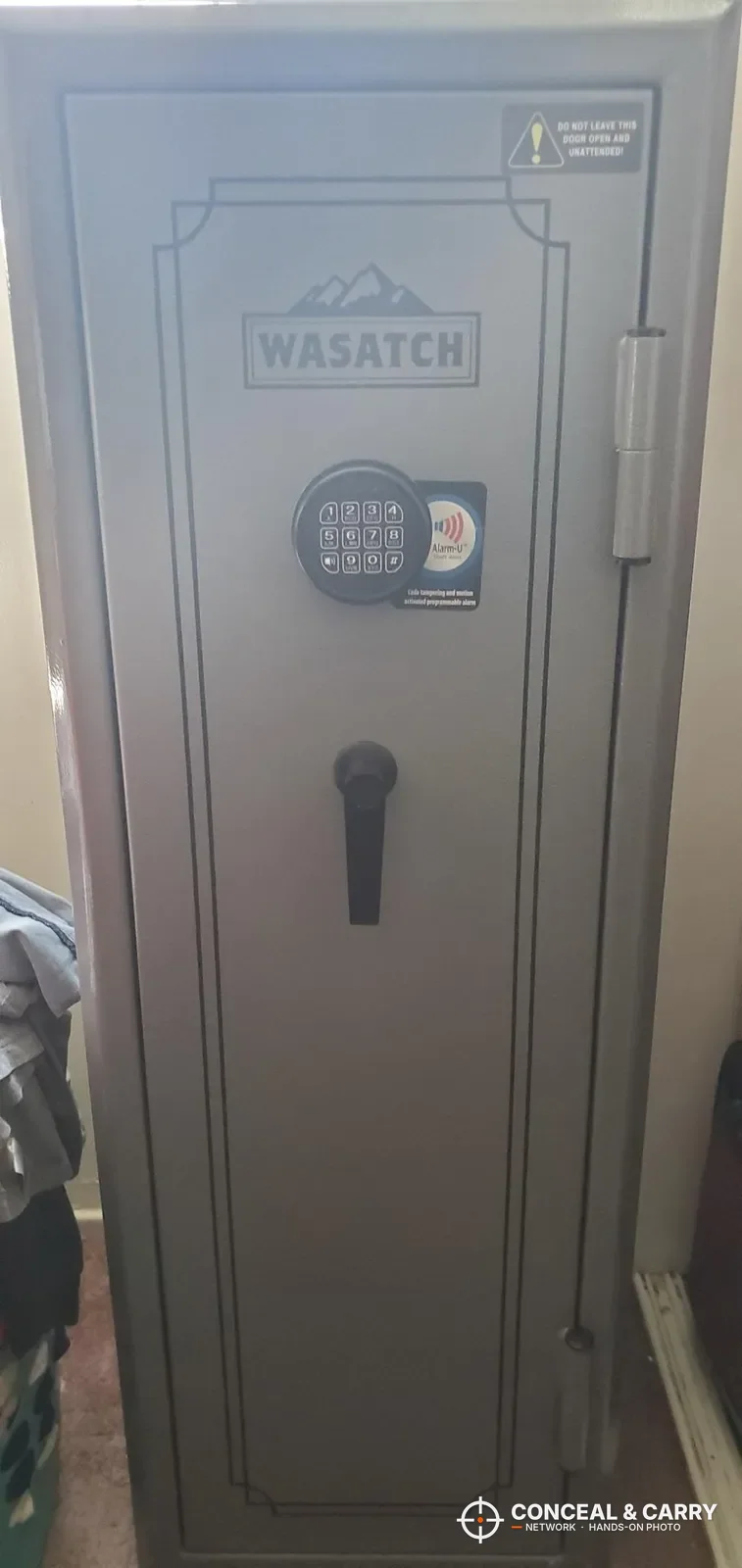
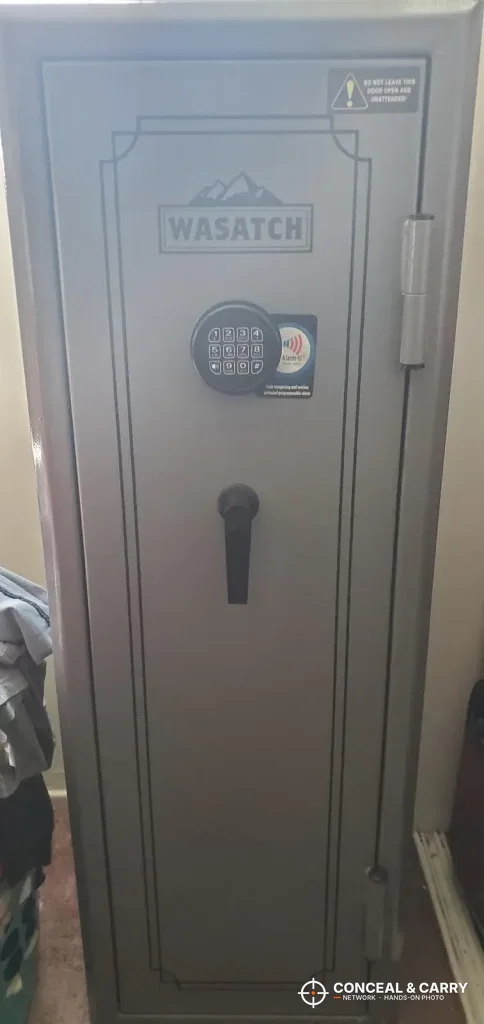
In the photo up top you can see the whole front: the Wasatch name near the top, the electronic keypad in the middle and a lever handle below it. Wasatch lists the keypad as backlit, which is the right call for a safe that ends up in a dim garage corner or a basement closet. The seller adds an Alarm-U function that sounds a theft alert and a deterrent alarm.
The listing doesn’t say how long the code can be, how many users it supports or what happens after repeated wrong entries. Those are questions for the manual, and they matter if several adults share access. Set your own code on day one. Not a birthday, not the house number, not the last four of your phone.
The lever handle is a good detail on a bigger safe. It’s easier to work with one hand than a spin handle, and that helps when you’re in a hurry or when somebody in the house has a weak grip.
DOOR & BOLTS:
Wasatch lists three 1.5-inch active locking bolts and two dead bolts. Active bolts are the ones that move into the frame when the lock engages. More locking points spread the load so a pry bar doesn’t have one spot to work on. That’s the right idea, but I can’t check those numbers, and the listing gives no door thickness or independent security rating.
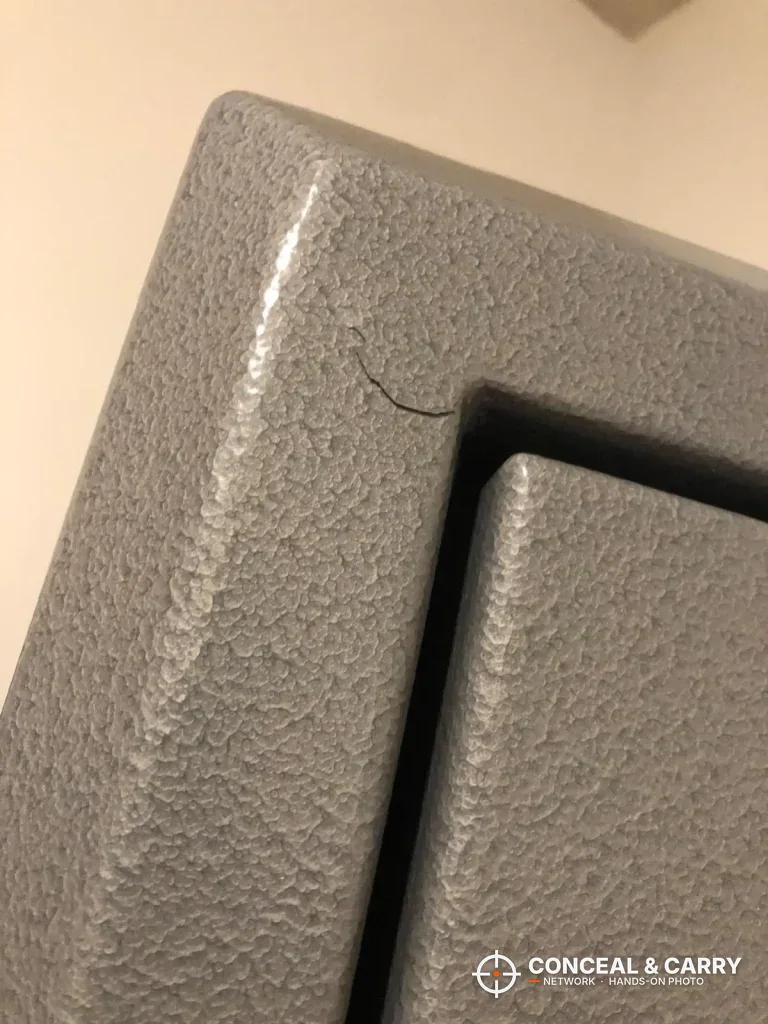
The close-up of the door corner shows the textured gray finish and the seam where the door sits in the frame. The hinges are on the outside, and the seller says they let the door open a full 180 degrees. That’s handy for loading long guns. The trade-off is that the hinges sit outside the body, so ask whether the manual describes hinge-side bolts or other protection against a hinge attack.
BUILD & STEEL:
The spec line says metal and stops there. No steel gauge, no body construction details and no weight. As an old lawman, the first thing I think about on any safe is the burglar with ten minutes and a pry bar, and steel thickness is a big part of how long those ten minutes feel to him. Without a number, I can’t stack this one up against other safes on paper.
The missing weight matters for another reason too. It decides how many people you need on delivery day, whether it’ll go up your stairs, and what your floor has to carry. Find it in the manual or the shipping notes before the truck shows up.
FIRE CLAIM:
This is the part that deserves the most care. The seller says the safe is rated for 1400 degrees for 45 minutes, and calls it fireproof and waterproof. I treat that as the manufacturer’s statement. No third-party lab or certification is named in the listing details.
No safe is truly fireproof. What comes out the other side depends on how long the fire burns, where the safe sits and what’s inside it. If you keep birth certificates, deeds, family photos or a hard drive in it, keep copies somewhere else too.
INSIDE ROOM:
Wasatch lists the outside at 20 inches deep, 17 inches wide and 55 inches tall, with 9.9 cubic feet inside. That’s a tall, narrow-front cabinet with good depth. The 18-gun label is a nominal count, and like every safe sold by gun count, the real number comes down when rifles wear scopes, wide magazines or thick stocks. Plan on a mix of long guns, not 18 of anything with a scope on it.
The listing doesn’t give interior dimensions, the shelf layout, or whether the door organizer is fabric or rigid. Measure your longest and widest rifle with the optic on, and check it against the real interior height once you can get it. A 55-inch outside leaves less than that inside.
The interior door storage is where pistols, magazines, papers and small accessories can go, which frees up the main room for long guns. With children in the house, I like ammunition locked up apart from the guns when you can manage it.
MOUNTING:
The spec sheet lists floor mounting. In the photo of the open door you can see the floor inside the safe with a round hole in it. The listing doesn’t say how many anchor holes there are, and the included components line says only “gun safe,” so plan to buy anchors made for your floor, whether that’s a wood subfloor or concrete.
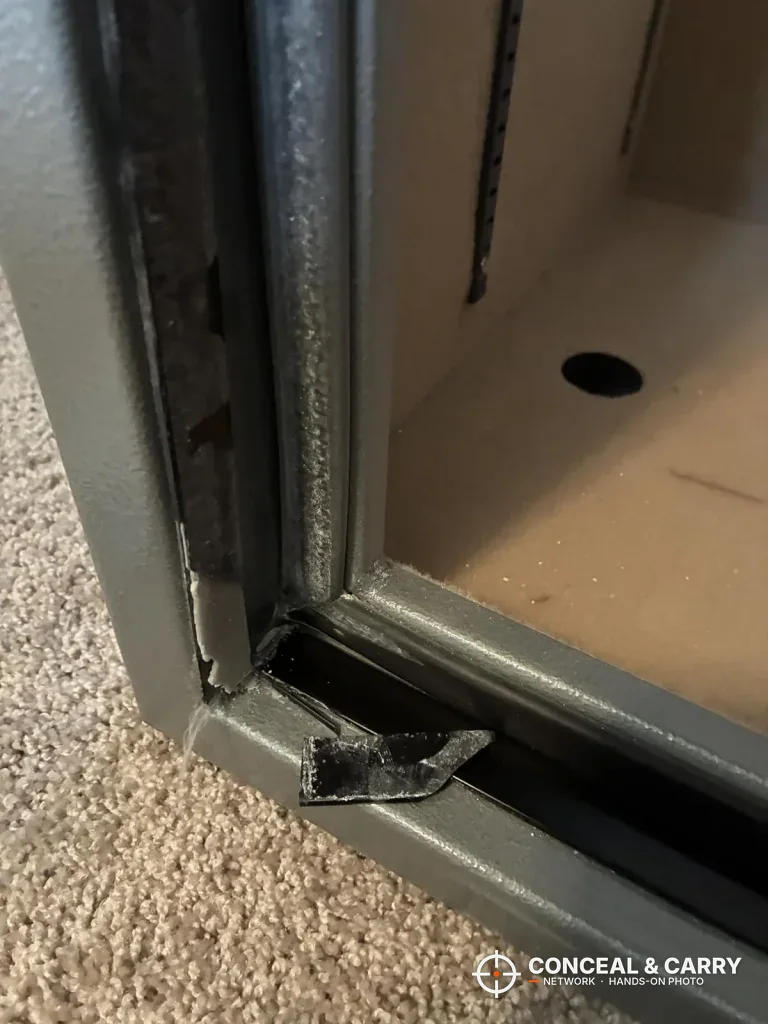
Anchoring a tall safe does two jobs. It makes the thief work a lot harder, and it keeps the safe from tipping, which is a real hazard around children. Put it against a wall, in a corner if you can, with room for the door to swing all the way open. In a damp basement, set it on a pad or a pallet instead of bare concrete.
If you have children in the house, this part isn’t optional. North Carolina’s safe-storage law (G.S. 14-315.1) can put you in court if a child gets hold of a loaded gun you left within reach and something happens with it. Other states have their own versions.
POWER & BACKUP KEY:
The keypad and alarm run on batteries, but the listing doesn’t say which type or how many. Check the manual for where the battery compartment is, whether you can reach it from the outside if the keypad dies, and whether there’s an outside power option. Change batteries on a schedule instead of waiting for a warning, and test the keypad with the door open after every swap.
The backup key is your way in when the electronics quit. I say it in every class: the key does not live on top of the safe, in a drawer beside it, or anywhere a child can find it. And it never, ever lives inside the safe. Test it once after setup so you know it works.
DELIVERY DAY CHECK:
A big safe is a pain to send back, so look it over before the delivery crew leaves. One close-up shows a red plastic cap with a tether on the gray steel, and another photo shows two small black plastic pieces laid out on a towel. I can’t tell from the pictures what those pieces came from, and the listing doesn’t cover it.
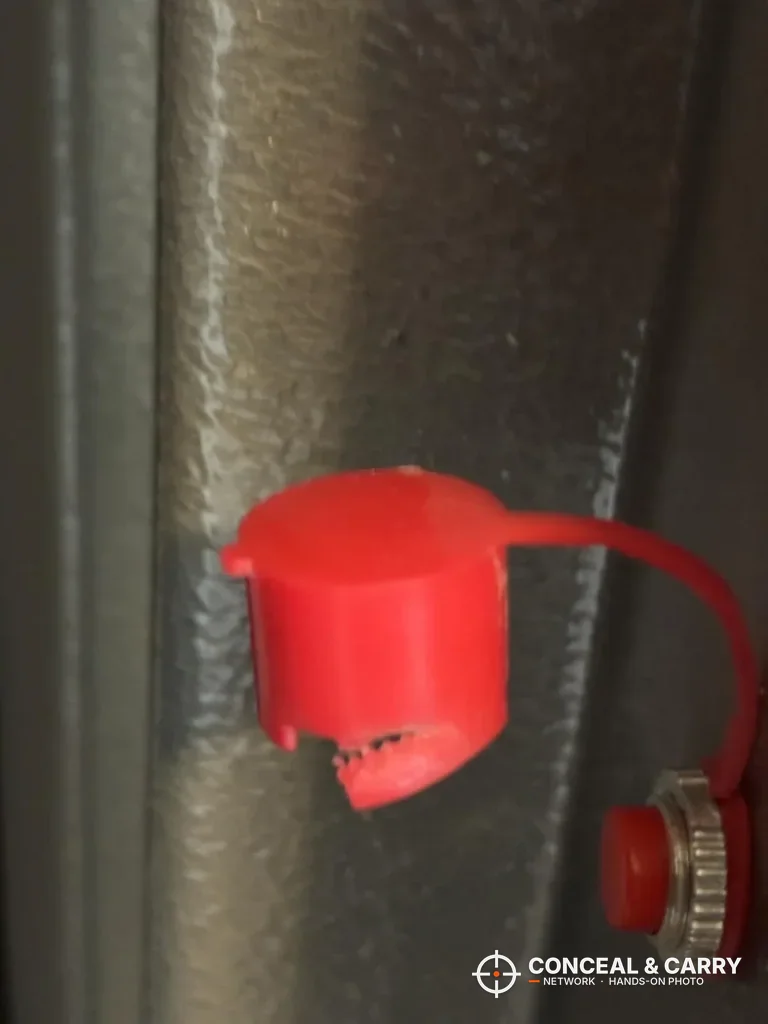
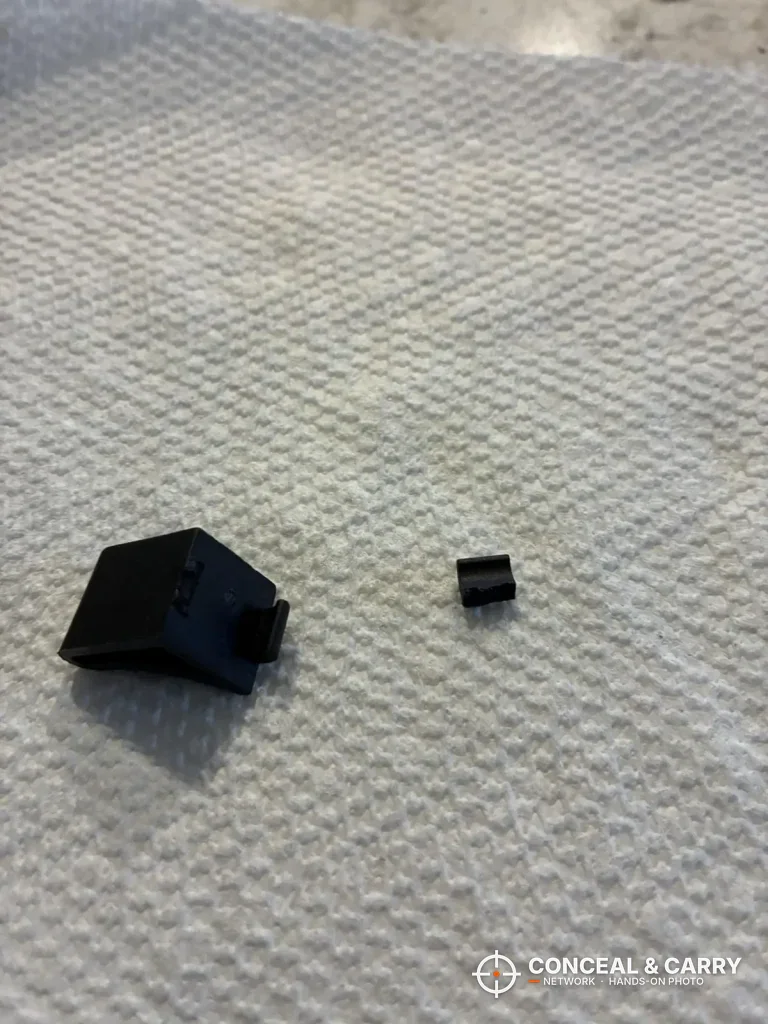
What I’d do: check every corner of the paint, open and close the door a few times to make sure it shuts square, work the handle and the bolts, and look over every plastic part and fitting. If something’s loose, missing or cracked, take pictures and contact the seller right then.
WHAT TO CHECK BEFORE YOU BUY:
Where it earns its keep: A heavy, solidly built fire-rated safe (close to 300 lbs) with heavier-gauge steel than many competitors at the price, a carpeted interior with adjustable shelves, tight door and lock tolerances, and an easy-to-set-up electronic lock.
Where it falls short: Freight shipping can leave scratches, paint chips or dents on a safe this heavy, which also makes returning a damaged unit impractical, and a portion of units arrive with minor hardware defects such as broken shelf clips or a loose reset button.
Who it’s for: Anyone wanting a heavy, fire-rated safe for a serious collection who will inspect it carefully on delivery; skip it if you cannot deal with possible freight damage on a nearly 300-pound item.
WHAT TO WATCH:
The missing numbers are the big one. Weight, steel gauge, warranty terms, interior dimensions and battery type aren’t on the listing, and the fire claim has no lab named. And at 55 inches tall, it has to be anchored.
WHO SHOULD BUY IT:
Buy it if you’ve outgrown a slim rifle cabinet, you want a keypad with a backup key, a lever handle and door storage, and you’d like a fire claim without stepping into a multi-thousand-dollar safe. At the time of writing it sat in the $500 to $1,000 range. Skip it if you need a fire rating from a named third-party lab, a rated burglary safe for an insurance policy, or a safe you can move through tight doorways and up narrow stairs without a fight.
SPECS AT A GLANCE:
| Spec | What Wasatch lists |
|---|---|
| Outside size | 20″ deep x 17″ wide x 55″ high |
| Capacity | 9.9 cubic feet, sold as an 18-gun model |
| Ways in | Backlit electronic keypad, backup key |
| Body | Metal (steel gauge not listed) |
| Bolts | Three 1.5″ active locking bolts and two dead bolts |
| Fire claim | 1400 degrees for 45 minutes, per the seller |
| Mounting | Floor mount |
| Extras | Alarm-U alarm, interior door storage, lever handle, external hinges with 180-degree opening |
| Color | Pebble Gray |
| Not listed | Weight, interior dimensions, battery type, warranty |
PROS & CONS:
Pros
- Roomy 9.9 cubic foot interior with good depth
- Backlit keypad plus a backup key
- Five bolts listed, with a 180-degree door
- Interior door storage and a lever handle
Cons
- Fire claim is the seller’s, with no lab named
- Weight, steel gauge, warranty and interior dimensions not listed
- Battery type and code details need the manual
$999.99 on Amazon (as of Oct 31, 2026, 12:05 AM EDT – details)
Shopping mainly for fire protection? See my best fireproof gun safe picks.
Wasatch 18EGW 18-Gun Safe FAQ
How many guns does the Wasatch 18EGW really hold?
Wasatch sells it as an 18-gun safe with 9.9 cubic feet of space, but that’s a nominal count. Scopes, wide stocks and magazines bring the number down. Interior dimensions aren’t listed, so measure your rifles and use the door storage for accessories.
Does the Wasatch 18EGW have a fire rating?
The seller states 1400 degrees for 45 minutes. No third-party lab or certification is named in the listing, so treat it as the manufacturer’s claim and keep copies of papers you can’t replace somewhere else.
What happens if the keypad or batteries fail?
Use the backup key. The listing doesn’t state the battery type, so check the manual. Keep the key away from the safe, never inside it, and test it after setup.
Can the Wasatch 18EGW be bolted down?
Yes. The spec sheet lists floor mounting. The anchor hole count and included hardware aren’t described, so buy anchors made for your floor and check the manual for hole locations.
All product photos on this page were taken by our team.
Chris Raper
Chris Raper is the founder and lead reviewer of Conceal & Carry Network. A retired North Carolina law-enforcement officer with more than 40 years of service and a U.S. Air Force Security Police veteran, he founded Concealed Handgun Carry, Inc. in Elm City, NC in 2006 and has taught the state-approved NC Concealed Handgun Carry class there ever since. He is an NC Department of Justice certified Firearms Safety Instructor, an NRA Pistol, Rifle and Shotgun Instructor, an NRA Range Safety Officer and a graduate of Massad Ayoob's Lethal Force Institute. He reviews the carry guns, holsters, safes and sight tools his students ask about every week.