 Chris Raper — Retired North Carolina law enforcement (40+ years) · U.S. Air Force Security Police · NRA-certified Pistol, Rifle & Shotgun Instructor · NC DOJ-certified Concealed Carry Instructor · Founder, Concealed Handgun Carry, Inc. (Elm City, NC, 2006)
 Bill Wilson — Founder, Wilson Combat · 1911 gunsmith since 1974 (manufacturer — disclosed) · Review date: October 31, 2026
In addition to my own research and what my students bring into the Concealed Handgun Carry class every week, this guide was reviewed by Bill Wilson of Wilson Combat, whose opinion appears below. The method line at the end of the article says exactly how this guide was built.
The pusher was supposed to be the safe method, and now there is a bright line across the top of your slide. It happens, it is almost always one of three setup mistakes, and on most finishes it is fixable. Here is the cause, the touch-up, and the three things that make it not happen next time.
The three ways a sight pusher marks a slide
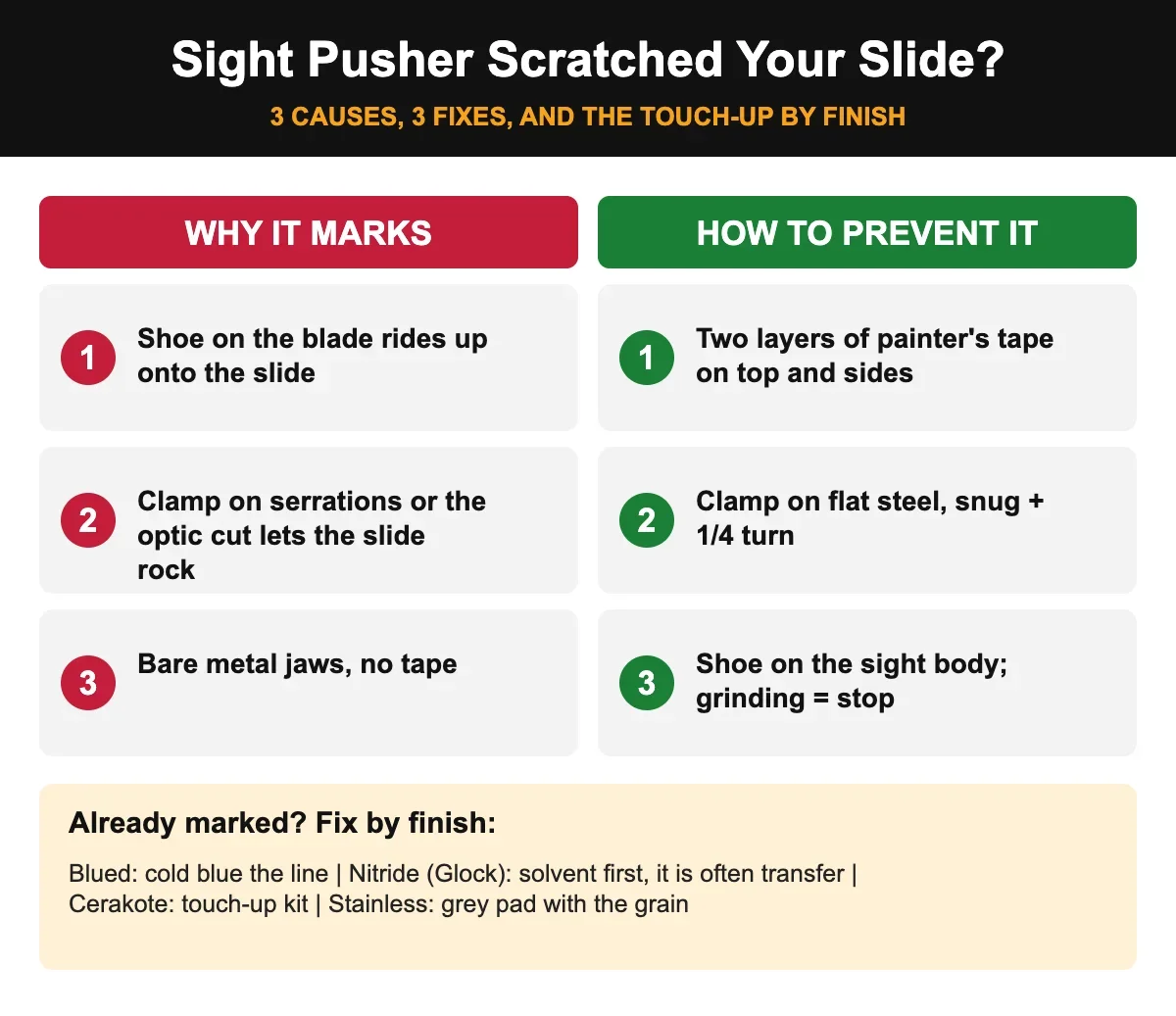
- The shoe rode onto the slide top. The shoe was seated on the sight blade or too high, and when the screw turned it climbed over the sight and dragged across the slide. This leaves a line or gouge on top, behind or in front of the sight. It is the most common cause and it is why the push should stop the moment the resistance feels like grinding instead of steady.
- The clamp sat on the serrations or the optic cut. Jaws on serrations bite the edges and let the slide rock; the rocking scuffs the finish along the clamp line. Jaws over an optic cut do the same.
- No tape, bare metal jaws. Budget pushers have bare aluminum or steel jaws. Without tape or pads, the clamp itself leaves witness marks along the slide sides, especially on soft finishes.
Fixing the mark
First, check whether it is a mark at all. Painter’s tape adhesive and aluminum transfer from a shoe both look like scratches and both wipe off with a little solvent on a patch. If it is real, the fix depends on the finish.
- Blued steel. Degrease, apply a cold blue (Birchwood Casey Perma Blue or similar) with a swab to the bare line only, neutralize, oil. It will not match perfectly under bright light, but it stops rust and hides it from a foot away.
- Nitride / Tenifer (Glock, most modern pistols). The finish is in the steel, so a light scuff is usually surface transfer rather than removed finish. Clean with solvent, then a dab of oil. A true gouge through nitride cannot be re-nitrided at home; touch-up pens hide it cosmetically.
- Cerakote. Cerakote touch-up kits exist in common colors; degrease, apply thin with a fine brush, cure per the kit. A full panel refinish is the only invisible fix.
- Stainless. A grey Scotch-Brite pad along the grain direction blends a light scratch. Go lightly and follow the existing brush lines.
Watch: “Removing scratches from a brushed stainless slide” by Four Peaks Tactical on YouTube.
Preventing it: three steps
- Tape. Two layers of painter’s tape over the slide top on both sides of the sight and down the sides where the jaws land. It costs nothing and absorbs the shoe or the jaw before the finish does.
- Clamp on flat steel. Behind the front serrations, forward of any optic cut. Snug plus a quarter turn. If the slide can move in the clamp, the slide will scuff.
- Shoe on the sight body. The thick base in the dovetail, not the blade. Correct shoe for the sight (angled for Glock-style, flat for others). If the screw starts to grind, stop and re-seat; that grinding is the shoe climbing.
The full sequence, including loosening set screws and degreasing the dovetail so you need less force in the first place, is in how to use a sight pusher.
Does the tool matter?
Some. Tools with polymer jaw pads and a full-capture clamp (the Wheeler) remove two of the three causes by design: the pads do not mark, and a captured slide cannot rock. Budget two-jaw pushers with bare jaws rely on you taping and clamping correctly. Neither type protects you from seating the shoe on the blade; that is always on the user. Our picks are in best sight pusher tools.
If it was the sight, not the slide
A crushed polymer sight or a cracked tritium housing is the same mistake from the other side: shoe on the blade, or a flat shoe on an angled sight. Polymer Glock sights are cheap to replace. A cracked tritium vial is not repairable; the sight is done. Angled shoe, sight body, slow turns.
FAQ
Will a sight pusher scratch my slide?
Not if the slide is taped, the clamp is on flat steel and the shoe is seated on the sight body. All three causes of marks are setup errors.
Can I fix a scratch on a nitride Glock slide?
A light scuff is usually transfer and wipes off with solvent. A real gouge cannot be re-nitrided at home; a touch-up pen hides it.
Do the padded jaws on the Wheeler prevent marks?
They prevent clamp marks. They do not prevent a mis-seated shoe from climbing onto the slide; tape and shoe placement still matter.
We may earn a commission from qualifying purchases made through links on this page, at no extra cost to you.

Massad Ayoob
Massad Ayoob is an editorial advisor to Conceal & Carry Network on self-defense law and defensive handgun guidance. Founder and director of the Massad Ayoob Group and, before it, the Lethal Force Institute (1981–2009), he has taught armed self-defense since 1974, served as a part-time New Hampshire police officer from 1972 (retiring as a captain), testified as an expert witness in use-of-force cases since 1979, and is the author of more than thirty books including In the Gravest Extreme and Deadly Force. He is president of the Second Amendment Foundation. Advisory role; he does not test products for this site.